
Hi, I am gXLg, also known online as
/dev/null.
My real name is
Dmitry Plesunov
and my pronouns are
He/Him.
I was born in Russia and moved to Germany at the age of 11.
Currently I am 22 years old.
I was born in Russia and moved to Germany at the age of 11.
Currently I am 22 years old.
I speak Russian and German at a native level and
fluently speak English. Also I am slowly learning
Japanese and can hold a simple conversation in it.
At the moment I am studying computer science and
working part-time as a customization engineer.
Contact
How Did We Get Here?
I discovered programming at 12, already
10
years ago, and it happened entirely by accident.
While browsing for mobile games on my old Nokia phone,
I found one that claimed it could create new games.
Curious, I downloaded it. It turned out to be a
6502 emulator that
required programming in binary.
I had no idea what that meant. So I started reading
the built-in documentation. I wrote down every opcode
and its arguments by hand. After weeks of trial,
error, and a lot of scribbled notes, I managed to
build a simple
Snake-like game
entirely in machine code. It took me a month.
I enjoyed every single minute of it.
That accidental discovery shaped everything that
followed. Since then, I've explored algorithms,
cryptography, machine learning, web development,
security, and many other areas of computer science
on my own. What started as
curiosity
became direction and shaped my
future.
Penguins For Everyone
Along the way, I also discovered Linux. Around 2018
I installed Ubuntu as my first distribution, and like
many curious users I soon began exploring others. I
experimented with Debian and Arch for a while before
eventually settling on
Manjaro with the
XFCE desktop environment,
which I still enjoy using today.
What fascinated me most about Linux was the philosophy
behind it. The entire system is built on
open-source software:
anyone can inspect the code, understand how things work
under the hood, and contribute improvements. It is
maintained by a global community and freely available
to anyone who wants to use it. That idea resonated
with me immediately.
Writing software, sharing it with others, and
improving it together became something I genuinely
enjoy. I often find myself spending hours
investigating problems or refining small details,
even when there is no external pressure to do so.
Today I actively maintain several open-source projects
aimed at different audiences. The constant feedback
from users and contributors has helped me improve my
skills over the years, and the interaction with the
community continues to motivate me to keep building
and maintaining software.
A Bit Of Everything Creative
Music
Apart from writing software, I enjoy creating in many
other ways. Music has always played an important role
in my life and has become one of my main
creative outlets.
Over the years I have explored hundreds of different
genres, constantly searching for new sounds and ideas.
Recently I have been listening a lot to
Post Punk,
Jungle,
Kawaii Pop
and Techno.
Music has always
helped me focus, process difficult moments, and
recharge mentally.
Listening eventually led to creating. I enjoy
producing music myself, mainly inspired by
Drum & Bass and
Breakcore. My tracks often
experiment with unusual sound combinations and
structures, blending fast rhythmic elements with
more atmospheric influences. You can find a small
collection of my work on
this page.
Creating
Creativity for me also extends into video games.
I enjoy exploring systems, discovering hidden
mechanics, and optimizing strategies.
Minecraft in
particular has been a perfect playground for that
mindset. I design large bases, engineer complex
redstone machines, and experiment with obscure
mechanics to automate tedious tasks.
One of those experiments started with something
simple: repeatedly breaking and replacing lecterns
to obtain specific
enchanting books
from librarian villagers. What began as a small
personal automation eventually evolved into an
open-source project called
LibrGetter,
which has since reached more than
20,000 downloads.
Competing
Competitive environments are also something I enjoy.
In first-person shooters like
Counter-Strike 2,
I focus on improving reaction time, strategy, and
mechanical precision. At some point in the future, I
am planning on building a team of players who
value disciplined gameplay, strong game sense, and
coordinated strategies.
Another challenge I regularly return to is
Clash of Code,
a programming competition where
participants solve algorithmic problems as quickly or
as efficiently as possible within a fifteen-minute
time limit. The problems themselves are usually not
extremely complex, but the pressure of competing
against other experienced programmers forces you to
think quickly and stay calm under time constraints.
My best ranking so far reached
29th place worldwide
around June 2026.
Building Things The Hard Way (On Purpose)
When working with new technologies, I rarely rely on
quick tutorials that focus on getting something running
as fast as possible. Instead, I prefer reading the
official documentation and experimenting on my own.
Tutorials show what to do, but
documentation explains the
concepts, assumptions and architecture behind it.
Understanding why something works has always been more
valuable to me than simply knowing how to reproduce it.
Because of that, I try to build a structured
understanding of the systems I work with. Rather than
treating tools and frameworks as black boxes, I explore
how their components interact, what design decisions were
made and where limitations or edge cases might appear.
This approach may take longer at first, but it pays off
when solving complex problems
or debugging unexpected behaviour.
A lot of my learning happens through small experiments
and side projects, which can
be found on my
GitHub.
When I encounter something interesting or inconvenient
during development, I often build a small tool around it.
Some automate repetitive tasks, others exist purely to
explore an idea or understand a technology better.
Over time this has led me to work with a wide range of
tools and technologies: CI/CD automation, command-line
tools, bash scripts, small web interfaces, HTML
calculators, and simulation projects involving genetic
algorithms and machine learning. Many of these tools
never become full products - they simply make development
easier or satisfy my curiosity.
Building things this way sometimes feels like taking the
long route, but every experiment adds another piece to
the puzzle and gradually forms a
deeper understanding of
the systems I work with.
Gallery

"The most important part of life is enjoying it."

"Serious and reputable"
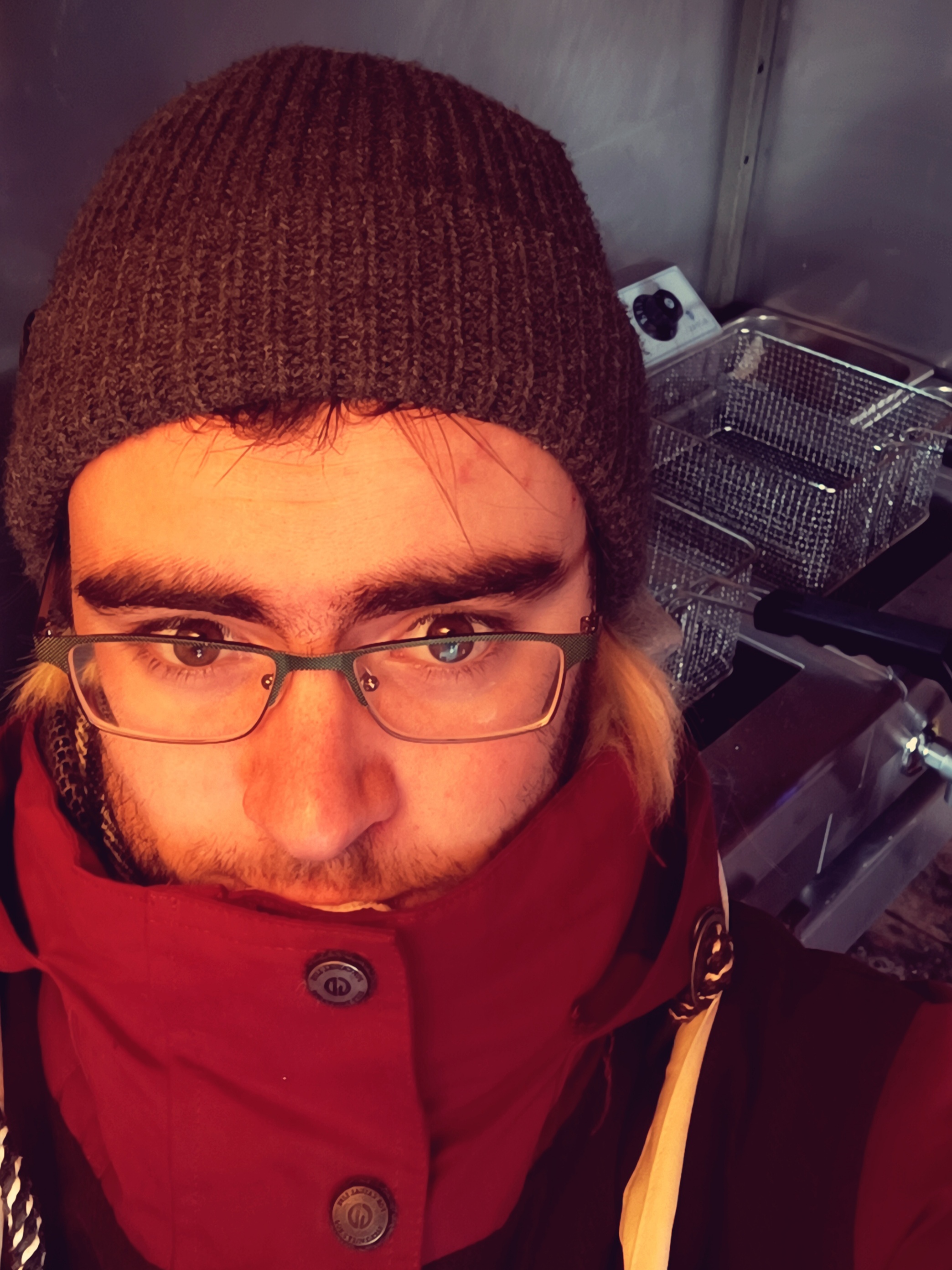
"Let them cook!"